Palm Sunday is a significant event in the Christian liturgical calendar, marking the beginning of Holy Week. It commemorates the triumphant entry of Jesus Christ into Jerusalem, where people waved palm branches and shouted praises, recognizing Him as the King.
But what does the Bible say about Palm Sunday? This post explores Bible verses directly related to Palm Sunday, offering insight into its spiritual meaning and significance.
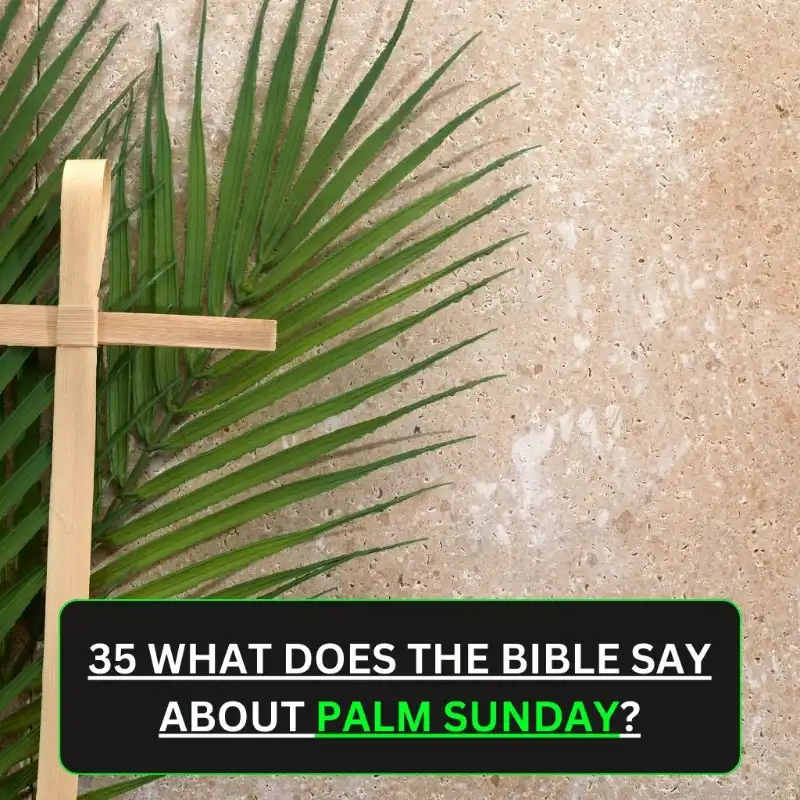
Each verse provides a glimpse into the deeper meaning of this powerful moment in the life of Jesus and how it speaks to us today.
1. Matthew 21:9
“The crowds that went ahead of him and those that followed shouted, ‘Hosanna to the Son of David!’ ‘Blessed is he who comes in the name of the Lord!’ ‘Hosanna in the highest heaven!'”
Explanation: This verse captures the jubilant atmosphere of Jesus’ entry into Jerusalem. The crowd greeted Him with “Hosanna,” a word that means “Save us” or “Save now,” recognizing Jesus as the Messiah. Their cries reflect their hope for deliverance, showing how Palm Sunday was a moment of recognition for Jesus as the promised King.
2. John 12:13
“They took palm branches and went out to meet him, shouting, ‘Hosanna! Blessed is he who comes in the name of the Lord! Blessed is the King of Israel!'”
Explanation: This verse emphasizes the use of palm branches, a symbol of victory and peace. The crowd declared Jesus as the “King of Israel,” affirming His role as the Savior and pointing to the fulfillment of messianic prophecies.
3. Mark 11:9-10
“Those who went ahead and those who followed shouted, ‘Hosanna! Blessed is he who comes in the name of the Lord!’ ‘Blessed is the coming kingdom of our father David!’ ‘Hosanna in the highest heaven!'”
Explanation: The people’s proclamation of Jesus as the one who comes in the name of the Lord reflects the messianic expectation of a coming king. They believed Jesus was ushering in the promised Kingdom of God, a kingdom marked by peace and salvation.
4. Luke 19:37-38
“When he came near the place where the road goes down the Mount of Olives, the whole crowd of disciples began joyfully to praise God in loud voices for all the miracles they had seen: ‘Blessed is the king who comes in the name of the Lord! Peace in heaven and glory in the highest!'”
Explanation: The crowd praised Jesus not just for His kingship but also for the miracles they had witnessed. They saw His acts as a confirmation of His divine authority. Their praise was not only a welcome of the King but a recognition of the divine power at work.
5. Zechariah 9:9
“Rejoice greatly, Daughter Zion! Shout, Daughter Jerusalem! See, your king comes to you, righteous and victorious, lowly and riding on a donkey, on a colt, the foal of a donkey.”
Explanation: This Old Testament prophecy foretells the humble and peaceful nature of the Messiah’s arrival. Jesus’ entry on a donkey fulfilled this prophecy, signaling that He came as a king of peace, not of war, in contrast to what many expected.
6. Psalm 118:25-26
“Lord, save us! Lord, grant us success! Blessed is he who comes in the name of the Lord. From the house of the Lord we bless you.”
Explanation: These verses were likely part of the chants of the crowd during Jesus’ entry into Jerusalem. The plea for salvation, “Lord, save us,” captures the deep longing for deliverance, and the blessing of the one who comes in the name of the Lord aligns with the people’s recognition of Jesus as their Savior.
7. Matthew 21:5
“Say to Daughter Zion, ‘See, your king comes to you, gentle and riding on a donkey, and on a colt, the foal of a donkey.'”
Explanation: This verse quotes the prophecy from Zechariah, reinforcing the idea that Jesus fulfilled the messianic expectation in a surprising and humble way. He came not with a sword, but with peace, showing that His reign would be different from earthly kings.
8. Mark 11:8
“Many people spread their cloaks on the road, while others spread branches they had cut in the fields.”
Explanation: The act of laying cloaks and branches on the ground was a gesture of honor and recognition of Jesus as a king. It was a symbol of submission and reverence, marking His arrival as a momentous event.
9. Luke 19:39-40
“Some of the Pharisees in the crowd said to Jesus, ‘Teacher, rebuke your disciples!’ ‘I tell you,’ he replied, ‘if they keep quiet, the stones will cry out.'”
Explanation: The Pharisees wanted to silence the crowd’s proclamation of Jesus as the King, but Jesus made it clear that His identity could not be suppressed. His arrival was so significant that even nature itself would proclaim His kingship.
10. John 12:15
“Do not be afraid, Daughter Zion; see, your king is coming, seated on a donkey’s colt.”
Explanation: This verse is a direct reference to Zechariah 9:9, showing that Jesus’ entry into Jerusalem was not a coincidence but the fulfillment of a prophetic promise. It underscores the importance of this event in God’s plan.
11. Matthew 21:10-11
“When Jesus entered Jerusalem, the whole city was stirred and asked, ‘Who is this?’ The crowds answered, ‘This is Jesus, the prophet from Nazareth in Galilee.'”
Explanation: The people were unsure of Jesus’ full identity, but they recognized Him as a prophet. This moment sets the stage for the growing awareness of who Jesus was, even as the tension of the coming week began to build.
12. Matthew 21:12-13
“Jesus entered the temple courts and drove out all who were buying and selling there. He overturned the tables of the money changers and the benches of those selling doves. ‘It is written,’ he said to them, ‘My house will be called a house of prayer, but you are making it a den of robbers.'”
Explanation: After His triumphant entry, Jesus cleansed the temple, showing His authority over religious practices that had become corrupt. This act demonstrated His zeal for pure worship and served as a direct challenge to the religious leaders of the time.
13. John 12:16
“At first his disciples did not understand all this. Only after Jesus was glorified did they realize that these things had been written about him and that these things had been done to him.”
Explanation: The disciples did not fully grasp the significance of the events on Palm Sunday until later, after Jesus’ death and resurrection. This reflects the progressive revelation of Jesus’ mission and identity.
14. Matthew 21:4-6
“This took place to fulfill what was spoken through the prophet: ‘Say to Daughter Zion, see, your king comes to you, gentle and riding on a donkey, and on a colt, the foal of a donkey.’ The disciples went and did as Jesus had instructed them.”
Explanation: Jesus orchestrated the details of His entry into Jerusalem to fulfill specific prophecies, showing His control over the events and His obedience to God’s plan. His gentle nature was in stark contrast to the military rulers of the time.
15. Mark 11:7-10
“When they brought the colt to Jesus and threw their cloaks over it, he sat on it. Many people spread their cloaks on the road, while others spread branches they had cut in the fields. Those who went ahead and those who followed shouted, ‘Hosanna! Blessed is he who comes in the name of the Lord!’ ‘Blessed is the coming kingdom of our father David!’ ‘Hosanna in the highest heaven!'”
Explanation: This passage emphasizes the crowd’s anticipation and excitement about Jesus’ kingship. Their cries of “Hosanna” were expressions of praise and hope for the salvation Jesus was about to bring, though they still misunderstood the nature of His kingdom.
16. Luke 19:41-42
“As he approached Jerusalem and saw the city, he wept over it and said, ‘If you, even you, had only known on this day what would bring you peace—but now it is hidden from your eyes.'”
Explanation: Jesus’ tears reveal His compassion for Jerusalem, as He saw the city’s failure to recognize Him as the source of peace. This moment shows the deep sorrow Jesus felt for those who would not accept His message of salvation.
17. John 12:17-18
“Now the crowd that was with him when he called Lazarus from the tomb and raised him from the dead continued to spread the word. Many people, because they had heard that he had performed this sign, went out to meet him.”
Explanation: The crowd’s excitement was fueled by the miracle of Lazarus’ resurrection, which had stirred great interest in Jesus. This miracle was one of the key signs that pointed to His divine power and authority.
18. Matthew 21:14
“The blind and the lame came to him at the temple, and he healed them.”
Explanation: After cleansing the temple, Jesus showed His compassion by healing those who were marginalized and in need. This act symbolized the healing and restoration He offers to all who come to Him in faith.
19. Mark 11:11
“Jesus entered Jerusalem and went into the temple courts. He looked around at everything, but since it was already late, he went out to Bethany with the Twelve.”
Explanation: This verse highlights the quiet, reflective nature of Jesus’ first moments in Jerusalem. Although the crowds had greeted Him with excitement, Jesus took time to observe and prepare for the challenges that lay ahead.
20. John 12:19
“So the Pharisees said to one another, ‘See, this is getting us nowhere. Look how the whole world has gone after him!'”
Explanation: The religious leaders were frustrated by the growing popularity of Jesus. They recognized that their attempts to control the narrative were failing, as Jesus’ influence continued to spread.
21. Matthew 21:15-16
“But when the chief priests and the teachers of the law saw the wonderful things he did and the children shouting in the temple courts, ‘Hosanna to the Son of David,’ they were indignant. ‘Do you hear what these children are saying?’ they asked him. ‘Yes,’ replied Jesus, ‘have you never read, “From the lips of children and infants you, Lord, have called forth your praise”?'”
Explanation: The children’s praise angered the religious leaders, but Jesus defended their spontaneous worship. This moment highlights how Jesus values heartfelt praise, even from those who might be overlooked by society.
22. Luke 19:44
“They will dash you to the ground, and they will not leave one stone on another, because you did not recognize the time of God’s coming to you.”
Explanation: Jesus prophesied the destruction of Jerusalem, warning that its failure to accept Him as the Messiah would lead to judgment. This foreshadows the tragic events of 70 A.D., when Jerusalem was destroyed.
23. Matthew 21:9
“The crowds that went ahead of him and those that followed shouted, ‘Hosanna to the Son of David!’ ‘Blessed is he who comes in the name of the Lord!’ ‘Hosanna in the highest heaven!'”
Explanation: The people’s joyful shout was a cry for salvation, acknowledging Jesus as the promised King. It reflects the deep spiritual yearning for God’s intervention and deliverance.
24. John 12:23
“Jesus replied, ‘The hour has come for the Son of Man to be glorified.'”
Explanation: Jesus recognizes that His public ministry is drawing to a close. His entry into Jerusalem sets the stage for the events that will lead to His crucifixion and ultimate glorification.
25. Luke 19:45-46
“Then he entered the temple area and began driving out those who were selling. ‘It is written,’ he said to them, ‘My house will be a house of prayer, but you have made it a den of robbers.'”
Explanation: Jesus’ cleansing of the temple symbolizes His desire for purity in worship. He challenged the commercialization of faith, calling people back to genuine devotion and reverence.
26. Matthew 21:2-3
“Go to the village ahead of you, and at once you will find a donkey tied there, with her colt by her. Untie them and bring them to me.”
Explanation: Jesus’ instructions to His disciples were deliberate and fulfilled prophecy. This action underscores Jesus’ control over the unfolding events and His alignment with God’s will.
27. Mark 11:1-3
“As they approached Jerusalem and came to Bethphage and Bethany at the Mount of Olives, Jesus sent two of his disciples, saying to them, ‘Go to the village ahead of you, and just as you enter it, you will find a colt tied there, which no one has ever ridden. Untie it and bring it here.'”
Explanation: This directive from Jesus demonstrates His divine foreknowledge and planning. He ensured that every detail of His entry into Jerusalem fulfilled the Scriptures and aligned with God’s plan.
28. Luke 19:11
“While they were listening to this, he went on to tell them a parable, because he was near Jerusalem and the people thought that the kingdom of God was going to appear at once.”
Explanation: Jesus addressed misconceptions about the nature of His Kingdom. The people expected a political kingdom, but Jesus used this moment to teach about the spiritual nature of His reign.
29. Matthew 21:16
“‘Do you hear what these children are saying?’ they asked him. ‘Yes,’ replied Jesus, ‘have you never read, “From the lips of children and infants you, Lord, have called forth your praise”?'”
Explanation: Jesus’ words affirm the value of genuine praise, even from those who might be considered insignificant. This highlights how God delights in the simple and pure worship of His people.
30. Mark 11:11-12
“Jesus entered Jerusalem and went into the temple courts. He looked around at everything, but since it was already late, he went out to Bethany with the Twelve.”
Explanation: Jesus’ entry into the temple was a time of observation, where He assessed the situation. His action foreshadows the coming confrontation with the temple practices.
31. Matthew 21:7
“They brought the donkey and the colt and placed their cloaks on them, and Jesus sat on them.”
Explanation: The act of placing cloaks on the animals and on the ground was a sign of respect and honor, symbolizing the recognition of Jesus as King and Messiah.
32. Luke 19:10
“For the Son of Man came to seek and to save the lost.”
Explanation: This verse highlights Jesus’ mission to save humanity, especially those who are spiritually lost. Palm Sunday begins the final journey toward the cross, where Jesus would complete His mission of salvation.
33. Matthew 21:19
“Seeing a fig tree by the road, he went up to it but found nothing on it except leaves. Then he said to it, ‘May you never bear fruit again!’ Immediately the tree withered.”
Explanation: Jesus’ cursing of the fig tree symbolizes His judgment on the religious leaders and those who appeared fruitful outwardly but lacked true spiritual vitality.
34. Mark 11:15
“On reaching Jerusalem, Jesus entered the temple courts and began driving out those who were buying and selling there. He overturned the tables of the money changers and the benches of those selling doves.”
Explanation: Jesus’ actions in the temple were a powerful declaration against the corruption of worship practices. His cleansing of the temple was a statement about the importance of reverence in God’s house.
35. Matthew 21:21
“Jesus replied, ‘Truly I tell you, if you have faith and do not doubt, not only can you do what was done to the fig tree, but also you can say to this mountain, ‘Go, throw yourself into the sea,’ and it will be done.'”
Explanation: This statement of Jesus underscores the power of faith. As He entered Jerusalem, He was reminding His followers of the transformative power of trusting in God’s authority.
Conclusion
Palm Sunday marks a powerful moment of recognition for Jesus as King. These Bible verses show us how the crowds responded with joy, acknowledging His role as the Messiah.
However, they also highlight the deeper spiritual messages of humility, faith, and salvation. Reflecting on these passages invites us to consider how we too can honor Jesus as our King and Savior.
How has the story of Palm Sunday impacted your faith? Feel free to share your thoughts or favorite verses in the comments below!
Also Read:
Related Bible Verses You Should Read